
What Is an Assessor? Roles and Qualifications Explained
An assessor is a qualified professional who evaluates whether a learner has the knowledge, skills, and competence needed to meet a required standard. In the UK, assessors work across vocational education and training — supporting learners on apprenticeships, NVQ programmes, and other work-based qualifications, and formally confirming their competence when they’re ready to achieve their award.
In simple terms, an assessor answers one key question on behalf of a qualification: does this person have what it takes?
This guide covers what assessors do, the different types of assessor roles, what qualifications you need, and how to get started if you’re thinking about becoming one.
What Does an Assessor Do?
An assessor’s role goes well beyond testing. At its heart, the job is about supporting learners to develop their skills and then making a fair, evidence-based judgement about their competence.
Day-to-day, an assessor’s work typically includes the following.
- Planning and preparation. Assessors plan sessions and choose methods that suit each learner. Because every learner is different, this planning is essential — it ensures everyone gets the right support at the right time.
- Workplace observations. A key part of the role involves watching learners work in real environments. For example, an assessor might observe a plumber on a job, a healthcare worker carrying out a procedure, or a business admin apprentice handling customer queries. So assessors need to feel comfortable working across a wide range of settings.
- Portfolio assessment. Learners build portfolios of evidence to show what they’ve learned. Assessors then check this evidence against official standards and decide whether it meets the required criteria.
- Providing feedback. Good feedback sits at the centre of the assessor role. Assessors explain what learners do well and where they need to improve. In addition, they frame this feedback in a way that builds confidence rather than undermines it.
- Record keeping. Assessors keep detailed records of each learner’s progress. These records track achievements, support quality assurance, and form part of the evidence trail that awarding bodies review.
- Final sign-off. When a learner meets all the required standards, the assessor formally confirms their competence. This is a significant responsibility — because it means the person is ready to be recognised as qualified in their field.
Types of Assessor Role
Several types of assessor role exist in the UK. Each has its own focus and requirements, so it’s worth understanding the differences before choosing a career path.
NVQ Assessor
An NVQ assessor works with learners completing National Vocational Qualifications. They assess both theoretical knowledge and practical skills — often across different settings, from classrooms to real workplaces.
Apprenticeship Assessor
An apprenticeship assessor works with apprentices as they learn on the job. They check that apprentices develop the knowledge, skills, and behaviours needed for their chosen career. In addition, they support learners throughout the programme rather than just at the end.
End-Point Assessor
An end-point assessor conducts the final assessment at the end of an apprenticeship programme. They work independently to make an objective judgement about whether an apprentice is ready to complete their qualification. Because of this independence, end-point assessment is a specialist role that requires specific training and approval from an end-point assessment organisation.
Workplace Assessor
A workplace assessor focuses on assessing competence in real working environments. Some work freelance, visiting multiple employers. Others work in-house, assessing their organisation’s own staff as part of an internal training programme.
Assessor Qualifications: Which One Do You Need?
To become a qualified assessor in the UK, you need a recognised assessor qualification. The right one depends on where and how you plan to assess. You can verify that all of the qualifications below are nationally accredited on the Ofqual Register of Regulated Qualifications. Here’s how the main options compare:
| Qualification | Best For | Assessment Type |
|---|---|---|
| CAVA — Level 3 Certificate in Assessing Vocational Achievement | Any setting — workplace, college, or training centre | Both competence-based and knowledge-based assessment |
| AVRA — Level 3 Award in Assessing Vocationally Related Achievement | Academic settings — workshops, colleges, training centres | Classroom-based assessment only |
| ACWE — Level 3 Award in Assessing Competence in the Work Environment | Workplace settings only | On-the-job, competence-based assessment only |
| UPPA — Level 3 Award in Understanding the Principles and Practices of Assessment | CPD or support roles — not for direct assessment | Knowledge only — does not qualify you to assess |
The CAVA — The Gold Standard
The CAVA is the most widely recognised and flexible assessor qualification available. Because it covers both workplace and classroom-based settings, most employers look for it — and it opens the most doors.
The CAVA has evolved over the years — from the D32/D33 qualification, through the A1 award, to the current CAVA format introduced in 2010. Each change improved the quality and relevance of the qualification to reflect modern assessment practice.
At Brooks and Kirk, our CAVA course is fully online. You study at your own pace, with dedicated tutor support throughout. In addition, we provide access to learners for you to assess as part of the course — so you don’t need to find them yourself.
Find out more about the CAVA qualification here.
AVRA and ACWE — Specialist Options
The AVRA suits assessors who work mainly in academic and classroom settings. The ACWE suits those who assess in real workplaces only. However, both are more limited than the CAVA. So if you’re not sure which setting you’ll work in, the CAVA is the safer and more flexible choice.
UPPA — Knowledge Only
The UPPA is a knowledge-based qualification with no practical assessment elements. Because of this, it doesn’t qualify you to assess learners on its own. However, it suits professionals who want to understand assessment principles — for example, as a CPD course or as a stepping stone before taking a full assessor qualification.
What Experience Do You Need to Become an Assessor?
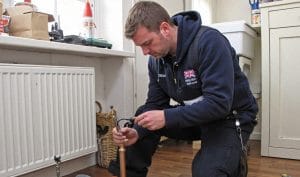
Before starting assessor training, you need occupational competence. This means you must have solid, recent experience in the area you want to assess.
- Work experience. If you want to assess plumbing apprentices, you should have worked as a plumber. If you want to assess healthcare learners, you need a background in healthcare. Most employers expect at least two to three years of recent, relevant experience. Because of this, assessors bring genuine industry insight to their role — not just theoretical knowledge.
- A Level 3 qualification. Along with experience, most assessor roles require a Level 3 qualification in your subject area. This might be an NVQ, a City & Guilds award, or an equivalent professional certification. It shows you have the technical knowledge needed to judge learners fairly.
- Communication and teaching skills. Modern assessors are dual professionals — skilled in their trade and equally skilled at supporting learners. Good communication, patience, and the ability to give constructive feedback are all essential. In addition, many assessors deliver training alongside assessment, so teaching confidence matters too.
Skills Every Assessor Needs
Beyond qualifications and experience, effective assessors bring a specific set of skills to the role.
- Communication. You need to explain requirements clearly, give feedback that motivates rather than discourages, and work well with learners, employers, and colleagues.
- Observation. Sharp observation skills help you spot both strengths and areas for improvement when watching learners work in real environments.
- Organisation. Assessors manage multiple learners at different stages of their programmes. So strong organisational skills ensure no one falls behind and all records stay accurate and up to date.
- Patience and empathy. Learning new skills takes time. Effective assessors show patience when learners struggle and offer encouragement when motivation drops.
- Attention to detail. Assessment decisions must be accurate and fair. Therefore, assessors must check evidence carefully against the required standards — not just work through a checklist.
- Adaptability. Every learner is different. Successful assessors adjust their approach to suit individual needs, learning styles, and circumstances.
Career Opportunities and Salary
Becoming a qualified assessor opens doors to a wide range of roles across the vocational education sector. Because demand for assessors stays consistently high, job security in this field is strong.
Assessor salary
Qualified assessors in the UK typically earn between £25,000 and £37,000 per year, depending on sector and experience. Freelance assessors generally charge £165–£200 per day, with specialists in high-demand sectors earning considerably more. For a full breakdown, see our assessor salary guide.
Internal Quality Assurer (IQA)
With experience, many assessors progress into IQA roles. IQAs oversee teams of assessors, monitor quality, and ensure consistency in assessment decisions. As a result, they typically earn between £27,000 and £35,000 per year. The Level 4 IQA qualification is the standard route into this role, and it requires the CAVA as an entry point.
End-Point Assessor
Experienced assessors can specialise as end-point assessors for apprenticeships. This independent role involves conducting final assessments and offers strong earning potential.
Freelance assessment
Many qualified assessors choose to work freelance — visiting multiple employers and training providers rather than working for one organisation. This route offers flexibility and, for those in high-demand sectors, the potential to earn more than equivalent employed roles.
Working Hours and Conditions
Working conditions vary depending on your role and employer.
Hours
Most assessors work standard full-time hours — typically 37 hours per week, Monday to Friday. However, flexibility is sometimes needed to fit around learners’ schedules, particularly in industrial or shift-based environments.
Location
Assessors often split their time between offices, training centres, and various workplaces. Travel is common — especially for those working with multiple employers across a region.
Work environment
The role is generally positive and rewarding. Seeing learners develop and achieve their goals brings genuine satisfaction. However, it can also be demanding — because assessors must balance supporting struggling learners with maintaining rigorous, consistent standards.
How Technology Is Changing the Assessor Role
Digital tools have changed how assessors work significantly in recent years.
- Digital portfolio management. Most training providers use online platforms to manage learner portfolios and track progress. These tools make record-keeping more efficient and help ensure consistency across different assessors.
- Remote assessment. Technology now allows some assessment to take place remotely — through video calls, digital evidence, and online professional discussions. As a result, assessors can support learners across wider geographic areas without travelling.
- Online training. Assessors can now gain their qualifications entirely online, fitting study around existing work and life commitments. At Brooks and Kirk, all of our assessor and IQA courses are fully online — with no classroom attendance required.
The Demand for Assessors in the UK
The UK government’s commitment to vocational training has created strong, sustained demand for qualified assessors. According to government apprenticeship statistics, apprenticeship starts have grown significantly in recent years — and that growth directly increases the need for qualified assessors to support them.
Beyond apprenticeships, several other factors drive demand.
Skills shortages
Many industries face significant skills gaps. Vocational training addresses these gaps, creating more assessment opportunities across construction, engineering, healthcare, and other key sectors.
Adult retraining
Economic change means more adults need to retrain for new careers. Because of this, demand for assessors who can support adult learners through career transitions stays consistently high.
As a result, now is an excellent time to consider becoming a qualified assessor. The sector is growing, roles are varied, and the qualification pathway is clear.
Ready to Become an Assessor?
At Brooks and Kirk, we’ve been delivering assessor qualifications for over 25 years. Our CAVA course is fully online, nationally accredited, and includes everything you need to qualify — including access to learners to assess, at no extra cost.
Because we’re a not-for-profit organisation, every penny of your course fee goes directly into delivering high-quality training and support. So you get more value from your investment.
Explore the CAVA qualification and enrol here.
If you have questions before committing, our team is happy to help. Email us at training@brooksandkirk.ac.uk or call 01205 805 155 — we’ll give you an honest answer to whatever you need to know.

Steve is a Chartered Manager and a Fellow of the Chartered Management Institute.
He provides Educational Consultancy to the 19+ sector as well as being an Assessor, IQA, EPA and Digital Marketing Professional. When not doing any of these he finds time, every now and then, to write blogs and articles.